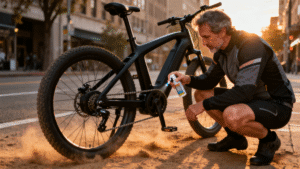
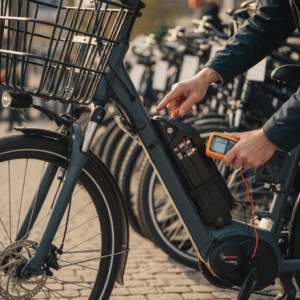
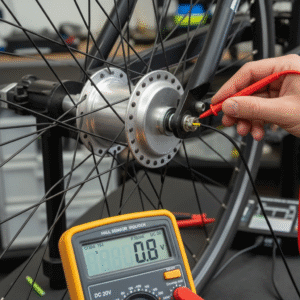
Mid-drive motors are brilliant at turning your legs into hill-eating torque. The catch? That same torque flows straight through your chain, cassette, chainring, and jockey wheels, magnifying every bit of misalignment, dirt, or poor lubrication. The result can be noise, drag, and accelerated wear. There isn’t one silver bullet-no magic lube or boutique part that fixes everything. What actually works is a system: choose lubrication for your riding environment, set up gearing that keeps the chain line friendly, and ride with simple habits that avoid cross-chaining and load-shifting abuse. This guide collects workshop pragmatism and rider-tested tweaks so commuters, trail riders, and cargo haulers can keep drivetrains quiet, efficient, and durable-without turning maintenance into a part-time job.Added paragraph: Think of your drivetrain as a chain of tiny bearings that must roll, not grind. Every choice you make-lube, ring size, pulley size, how you shift-nudges those bearings toward rolling or scraping. That’s why “good enough” setup on a pedal bike can feel mediocre on a mid-drive: torque exposes shortcuts. Get the fundamentals right and the bike feels calmer, quicker, and easier to live with each week.
Key Takeaways
If you only remember one thing, let your conditions decide your lube, let your cruising speed land on mid-cogs, and let habit do the heavy lifting. None of this requires exotic parts or a full shop bench; it’s about doing small actions consistently. Most riders notice the transformation not as a dramatic “before/after,” but as a week-by-week disappearance of squeaks, gritty feel, and mystery shifts.
- Let the environment choose the lube: dusty/occasionally wet → wax (hot-melt or drip); clean/dry pavement → high-quality oil.
- Gearing mindset: larger chainring and (optionally) larger pulley wheels, use mid-cogs as your default, and avoid extremes.
- Habits first: shift early, look at the chain line, and skip “big-big” or “small-small” pairings.
- Maintenance cadence: frequent light touch-ups beat infrequent heavy overhauls on mid-drives.
My commute is dusty with occasional rain-should I use hot wax or a premium drip oil?
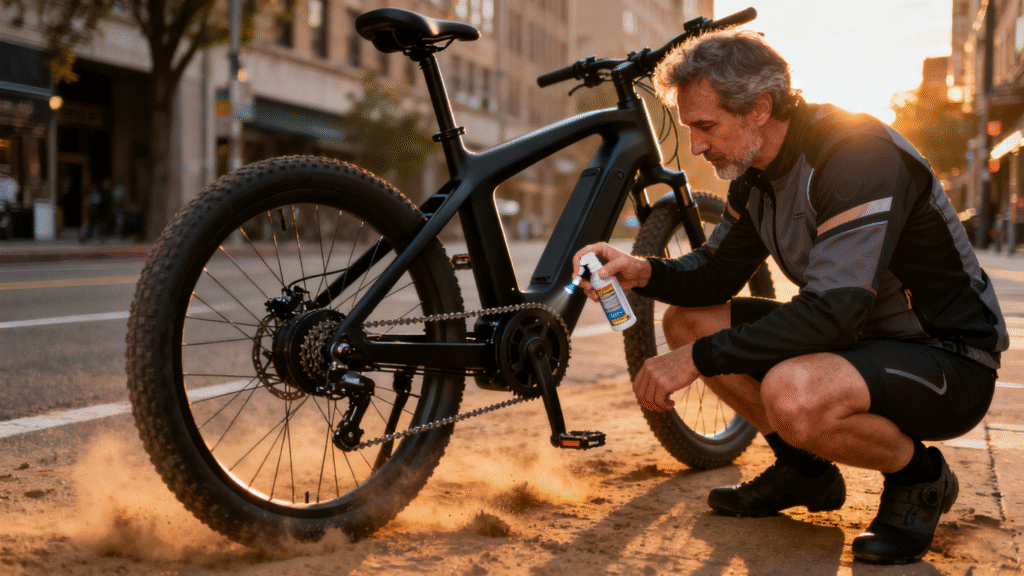
Start by observing your chain after typical rides. If it comes home peppered with tan dust that turns black and pasty around the jockey wheels, you’ll benefit from a wax approach that sheds grit instead of absorbing it. If your chain usually looks clean but runs long miles between services, a premium oil can stretch intervals. The “right” answer is the one that keeps the rollers quiet with the least mess for your schedule.
Quick Decision Table
Decision tables are guides, not handcuffs. Try a method for two weeks, track how many kilometers you get before noise returns, and check how grimy the outer plates look. That simple log will beat any forum opinion because it’s calibrated to your weather, roads, and power level.
- Dusty lanes / light off-road dust / occasional showers + you want a clean, non-gritty chain: go wax-based (hot-melt or drip-on wax).
- Dry pavement, long intervals between service, and you want maximum longevity per application: choose a premium drip oil (ideally with modern friction modifiers).
- Four-season mix: run drip wax as your default and top up after rain, or keep two routines-wax in summer, oil in prolonged wet.
Recommended: Best Recommended Durable Hydraulic Brake Conversion Kits for Electric Bikes
Three Lubrication Paths: Pros, Cons, and Service Rhythm
No lube type is universally “best.” Hot-melt shines when you’re willing to front-load effort; drip wax is the pragmatic middle ground; premium oils reward riders who value durability per application. The smart move is to pick the one you’ll actually maintain-consistency beats theoretical watt savings you never realize.
Hot-melt wax (full-chain treatment)
- Pros: extremely clean, low dust pickup, quiet running, and strong efficiency. The chain and cassette keep that “dry, satin” feel; cleanup is minimal.
- Cons: initial setup takes effort-degrease thoroughly, remove chain, and immerse in hot wax. Wet, cold stretches can shorten intervals.
- Service rhythm: ~250-400 km per treatment in dry commutes; ~100-200 km in dusty or wet/cold conditions (your roads will decide).
- Best for: riders who like one big setup and then smooth, predictable upkeep.Added paragraph: When dialing hot-melt, don’t rush the degrease phase. Any residual factory oil contaminates wax adhesion and shortens the honeymoon. A properly prepped chain feels almost powdery-if it feels tacky, you either didn’t wipe enough bloom after cooling or you carried oils into the bath.
Drip-on wax
- Pros: no chain removal; stays cleaner than oil in grit; quick top-ups; easy to learn.
- Cons: each coat tends to be less durable than hot-melt; needs time to cure and an extra wipe to keep the outside dry.
- Service rhythm: ~150-250 km in commuting; top up after rain or heavy dust.
- Best for: daily riders who want clean hands and low-mess maintenance.Added paragraph: Success with drip wax hinges on patience. Apply sparingly, let it soak, then buff the plates dry so dust has nothing sticky to cling to. Riders who complain drip wax “doesn’t last” often skip that final wipe or ride immediately before curing.
Premium drip oil (wet/dry formulas)
- Pros: deep penetration, longer single-application life on clean pavement, good for riders who can’t service often.
- Cons: attracts more dust; requires more conscientious outer-plate wiping and periodic deep degreasing.
- Service rhythm: ~250-500 km in dry road use; increase cleaning frequency after dirty rides.
- Best for: high-mileage road commuters or anyone who values long stretches between services.Added paragraph: With oils, the mantra is “inside wet, outside dry.” Flooding links feels satisfying but backfires by making a dirt magnet. Put a drop on each roller, spin the cranks, then wipe until the chain looks new-your cassette will thank you later.
Five-Step How-To (Works for All Three)
Treat this routine like brushing your teeth-short, regular, and nearly automatic. A two-minute wipe after rides prevents the slow, invisible bake-on that forces a full teardown. The goal isn’t showroom shine; it’s preserving the rolling surfaces so they remain smooth under mid-drive torque.
- Clean: remove loose dust with a dry cloth; if old oil/grime is heavy, use a mild degreaser, soft brush, warm water, then dry completely.
- Lube/wax: apply at the lower chain span while slowly back-pedaling so the product reaches the rollers and pins.
- Let it set: allow drip wax/oil to penetrate and cure (check product time); let hot wax cool and harden.
- Wipe the outside: remove all surface residue so the chain feels dry to the touch; this prevents dust paste.
- First-ride check: after the first spin, give the outer plates one more light wipe; listen for a smooth, sand-free sound.
Recommended: Best Electric Bikes for Seniors 2025: Complete Safety & Comfort Guide
I’m on 11-speed-should I drop to 8/9-speed? Are bigger pulley wheels and a larger chainring worth it?
Start by auditing your real-world usage. If your everyday cruise sits on the smallest cogs, efficiency and noise will suffer-regardless of speed count. A slightly larger front ring that moves cruise to mid-cogs can feel like magic. Conversely, if your cadence feels perfectly stepped and you rarely service parts, keep your 11-speed and optimize chainline before chasing wholesale changes.
The “Downshift” Decision: Durability, Cost, and Feel
The often-missed cost is mental bandwidth. Fewer speeds with bigger steps can simplify decisions under load, especially when towing or climbing. But if you ride rolling terrain and value tight cadence control, the richer steps of 11/12-speed keep you “on song.” Choose the cadence story you want, then backfill the hardware-never the other way around.
- 8/9-speed chains are typically a bit burlier and more tolerant of imperfect alignment; under mid-drive torque they can enjoy longer service life and come with cheaper consumables.
- 11/12-speed brings finer steps and wider gearing coverage. If your current system is dialed-freehub, shifter, derailleur, cassette, and chain-tearing it down purely to chase potential longevity may not pencil out once you factor parts cost and compatibility.
- Don’t downrate if:
- You love the feel and cadence control of your 11/12-speed;
- You rely on tight steps for stop-and-go or rolling terrain;
- Your wheel/freehub and controls would need expensive changes.
- Consider a simpler group if:
- Your mid-drive sees heavy cargo or frequent steep climbs;
- You want easy, lower-cost upkeep and can change multiple components in one go.
Where Bigger Rings and Pulleys Pay Off
Think of bigger rings and pulleys as “gentler geometry” for the chain. By easing bend angles and reducing chain speed on the tiniest cogs, you take harshness out of the system. The gains may sound small on paper, but on a mid-drive the feel-quieter running, less rasp under load-is what convinces most riders.
- Larger chainring: increases wrap and reduces how sharply the chain must bend. For the same cadence, the chain path can become smoother and quieter, often trimming wear and noise. It also helps you avoid living on the tiniest rear cogs at cruising speed.
- Oversized pulley wheels (12-15T): decrease the bend angle at the derailleur and reduce sliding friction at the pulleys. Gains aren’t night-and-day, but mid-drives reward any reduction in harsh chain angles-many riders notice calmer sound and a touch of efficiency.
- Value order (typical):
- Right-sized chainring so you don’t depend on the 11-12T cog for steady cruising;
- Oversized pulley wheels (and ensure your derailleur bearings are healthy);
- Boutique small parts (ceramic bits, etc.)-nice, but ROI depends on your overall setup.
Three Budgeted Upgrade Paths
Budget pathways work best when you measure results. After each change, listen for noise in your cruising gear, note average speed at your normal effort, and peek at outer-plate cleanliness. If you can hold speed with fewer revs and less rasp, you’re moving in the right direction.
- Budget: re-map your “home gear” to mid-cogs; refine limit screws and B-tension for straighter chain lines and crisp shifting.
- Mid-range: install a slightly larger chainring or re-stack cassette choices so your everyday speed lands on mid-cogs rather than the smallest two. Keep a bailout low gear for climbs.
- Flagship: add oversized pulley wheels and low-friction bushings/bearings; pair with a high-quality chain and a consistent cleaning routine to magnify the benefits.
Recommended: Funhang Electric Bike Reviews | Affordable Amazon E-Bikes – Honest Take
I keep cross-chaining-what zero-effort habits instantly cut wear?
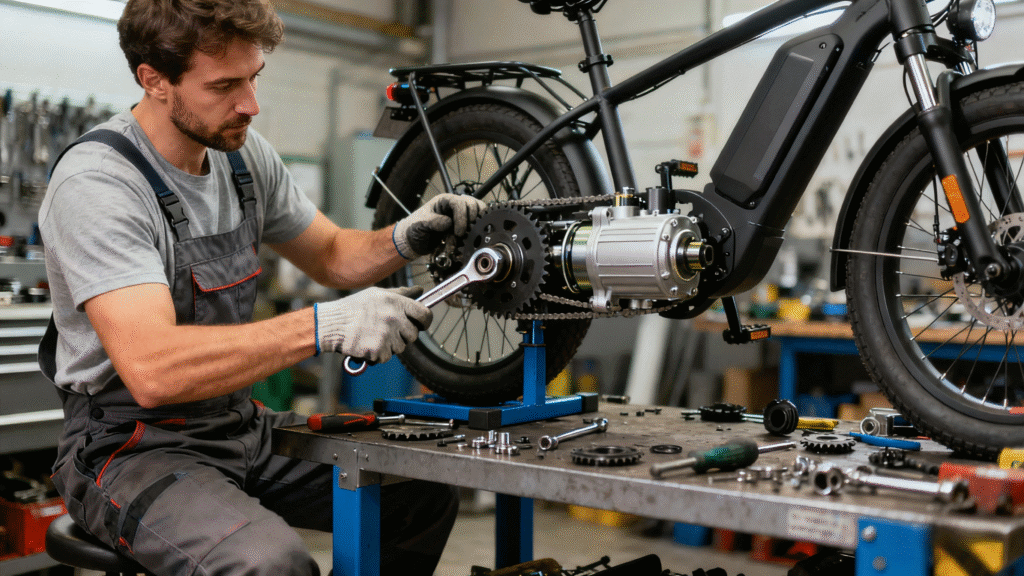
Habits are the cheapest upgrade you’ll ever buy. A week of mindful shifting usually erases most cross-chaining without any hardware changes. Focus on what your ears tell you; a mellow, even note from the drivetrain is proof your angles are good and the rollers are rolling.
The “Three Don’ts” and “Three Dos”
If you struggle to internalize these rules, tape a tiny reminder on your top tube: “Mid-cogs. Pre-shift. Look.” It sounds corny, but after a few rides the muscle memory sticks, and you’ll wonder why the bike suddenly feels “expensive” even if you changed nothing else.
Don’ts
- Don’t pair big chainring + big cog or small chainring + small cog as your cruising setup.
- Don’t wait to shift until you’re grinding up a hill at full torque.
- Don’t ride blind-if you never glance at chain position, you’ll drift into bad angles.
Dos
- Shift early-drop gears before the hill or stop sign so the chain isn’t punished under peak load.
- Look at the chain line-a quick glance keeps you honest and prevents chronic cross-chaining.
- Live in the mid-cogs-let the edges be short-use solutions, not everyday gears.
Quick Gearing Rules of Thumb
Use landmarks to anchor your habits. For commuting, pick a “default” mid-cog that matches 25-30 km/h on flat ground; for trails, identify the cog that feels steady on moderate grades. When effort spikes, you’ll have a home position to return to, keeping chain angles safe by default.
- Commuting: pick a middle chainring × mid-cog combo as your “home gear” and nudge one or two cogs up or down for wind or slope.
- Trail/Off-road: pre-shift two gears before the climb and keep the chain around the cassette’s center; avoid extreme cross-chain plus out-of-saddle rocking on ledgy climbs.
- Cargo/Steep work: go slightly larger on the front ring so your everyday cruise sits on ≥13-15T cogs, minimizing stress on the tiniest sprockets.
The 1-Week Micro-Maintenance Loop
This loop isn’t about perfection; it’s about never letting grime compound. By the time a chain looks filthy, damage has started. Tiny, regular resets keep friction low and postpone the day you need to buy a cassette and ring together.
- Wipe: quick outer-plate wipe and a touch around the pulley wheels to remove dust lips.
- Dot lube: add a small amount right on the rollers while rotating the cranks for 2-3 turns.
- Dry the outside: remove all excess so the chain feels clean to the touch.
- Check: look for early chain stretch with a checker, verify cable condition/retraction, and confirm B-tension.
- Log: snap a photo or note mileage; if you see the “black paste” trend, schedule a deeper clean before it becomes grinding compound.
Scenario Playbooks
Playbooks exist to reduce thinking when you’re busy. Pick the one that matches most of your riding and follow it for a month. If it feels smooth, stick with it; if it’s fussy, tweak one variable at a time-lube first, then chainring size, then cassette choices.
- Urban commute (dust + occasional rain): drip wax or hot-melt wax, a slightly larger chainring, and a mid-cog cruising habit. Top up every two weeks or right after wet rides.
- Road commute (dry): premium drip oil with a strict wipe-down after each ride and a monthly deep clean.
- Trail riding: drip wax plus pre-shift before climbs, then a quick clean and small top-up after each muddy day.
- Cargo & climbing duty: larger front ring and avoid living on the smallest cog; check chain stretch frequently. If climbs are relentless, consider a cassette with sensible low gears or even a simpler, wider-range setup.
Recommended: Concord Electric Bike Reviews – Walmart’s Affordable Commuter E-Bikes Examined
Common Myths to Retire
Myths thrive because they contain a grain of truth in narrow contexts. A shiny chain can be fine on a clean showroom floor; the smallest cog can be fine for short sprints. Mid-drives just erase the margin for error. Replace rules-of-thumb with observation: listen, feel, and adjust until the drivetrain keeps a steady tone under your normal load.
- “If the chain looks shiny, it’s lubricated.” Not necessarily. A glossy exterior can hide a dry core. Lubrication has to reach the rollers and pins to reduce friction.
- “If it isn’t filthy, it doesn’t need cleaning.” Dust plus old lube forms a gritty paste that eats parts. Light, regular cleaning is cheaper than letting grime bake in.
- “High power belongs on the smallest cog.” Tiny cogs at high chain speed amplify noise, angle, and wear-especially with a mid-drive. Save them for short bursts.
- “One big overhaul beats frequent small touch-ups.” On mid-drives, the reverse is usually true. Small, consistent maintenance prevents the expensive spiral of chain + cassette + ring replacement.
Checklists & Reference
Keep these references printed near your tools. Fast checks turn into habits, and habits protect parts you can’t see wearing until it’s too late. If you ride through winter or dust season, bump cadence by 20-30%-you’ll stay ahead of the environment instead of reacting to it.
Service cadence (suggested)
- Dry pavement: premium oil every ~250-500 km; monthly deep clean.
- Dusty commutes: drip wax every ~150-250 km; top up after wet rides.
- Hot-melt wax: ~250-400 km in clean/dry settings; ~100-200 km in dusty/wet/cold.
Quick chain-wear thresholds
- 0.5% stretch: okay for light duty, but on mid-drives start planning a replacement to protect cassette/chainring.
- 0.75% stretch: replace the chain on most setups to avoid eating the cassette.
30-second pre-ride shifting checklist
- Scan the road for climbs/stops.
- Complete any needed downshifts before the hill or light.
- Start in a mid-cog and fine-tune after you’re rolling smoothly.
Conclusion
High torque doesn’t have to mean high wear. If you match lubrication to the environment, size and select gearing so your everyday cadence lives in the middle of the cassette, and clean lightly but often, your mid-drive will hum along quietly for thousands of kilometers while protecting the wallet. Your next steps are simple:
- Pick a lube path (hot-melt wax, drip wax, or premium oil) that fits your roads and time budget.
- Make your home gear a mid-cog combo; consider a slightly larger chainring so cruising speed isn’t stuck on the smallest sprocket.
- Adopt the one-week micro-maintenance loop and note mileage.
The beauty of this approach is compounding returns. The first week restores quiet; the second reduces grit; the third keeps wear flat even under torque. By month’s end, you’ve built a drivetrain that feels effortless on familiar routes. That’s not luck-that’s small, repeatable choices adding up.