Funhang is a newer name in the e-bike world, gaining attention for its budget-friendly electric bikes sold on Amazon and through its own store. These bikes promise surprisingly solid specs – like a 500W motor (1000W peak), 48V battery, and extras such as lights, a horn, and even turn signals – all at prices often under $600. But are Funhang electric bikes any good, or is the old adage “you get what you pay for” true here? In this comprehensive review, we take a neutral look at the Funhang brand and its products, compare them to other entry-level e-bikes, weigh pros and cons, and see if they’re a smart choice for beginners and everyday riders.
Funhang Electric Bikes: Key Takeaways
-
Excellent Value for Money: Riders report that Funhang e-bikes are “legit and brilliant for the price,” delivering performance that exceeds expectations for such a cheap ride. Many consider them an entry-level ebike that’s almost unbeatable in value for under $600.
-
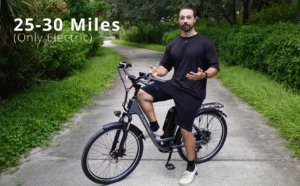
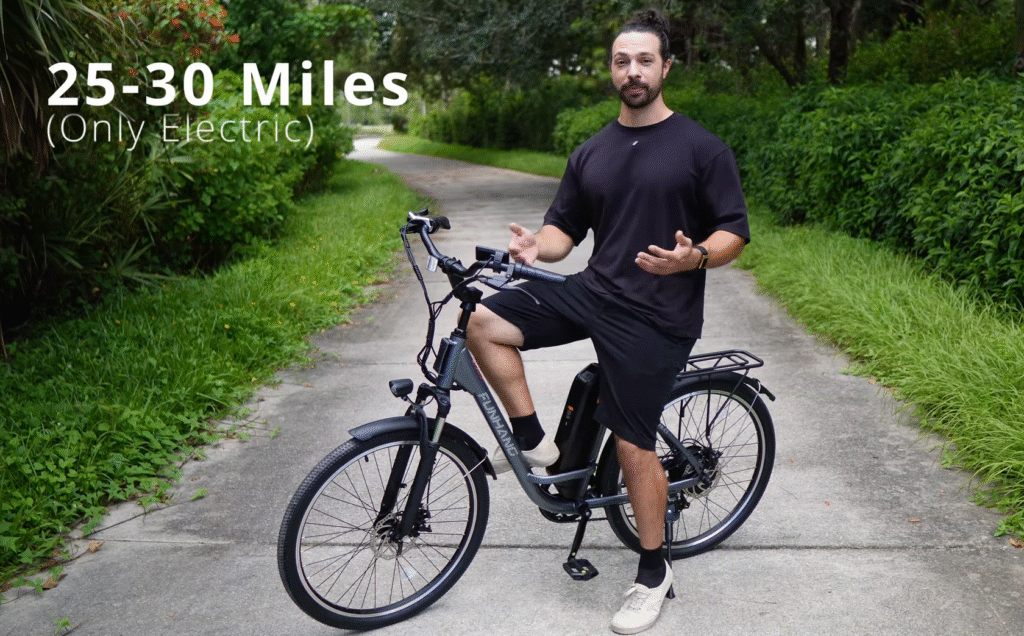
Solid Performance: The flagship Funhang EB-M1 uses a 500W rear hub motor (1000W peak) that propels the bike up to ~21.7 mph (35 km/h) out of the box. With the speed limiter unlocked, some users even hit ~25 mph on flat roads. A 48V removable battery (around 374 Wh) provides an honest 25–30 miles range on throttle alone, and 40–50 miles with pedal assist – impressive for a budget e-bike.
-
Included Features: Funhang doesn’t skimp on extras. Every model comes with an LED headlight, taillight, electric horn, and on certain models, even integrated turn signals for safer commuting. An LCD display with 5 levels of assist, front and rear disc brakes, front suspension, fenders, and a sturdy rear rack are typically included, making these bikes road-ready out of the box.
-
Sturdy but Heavy: Built with high-strength frames (steel on the fat-tire model and alloy on others), Funhang bikes feel solid and can carry riders up to ~300 lbs. The trade-off is weight – about 50–68 lbs depending on the model. This heft adds stability and durability off-road, but can make the bike cumbersome to carry or pedal without assist.
-
Beginner-Friendly Choice: Between the affordable price, moderate top speed, and simple controls, Funhang e-bikes are very friendly to new riders. They arrive 85% assembled and take roughly an hour to put together. Owners frequently comment on how “easy to operate” and fun these bikes are, even for daily commutes. A 12-month warranty and responsive customer support (replacement parts are often shipped out when issues arise) provide some peace of mind despite the off-brand name.
The Funhang Brand and Its Product Lineup
Funhang is a relatively new e-bike brand (originating from China) that markets directly to consumers online. It gained popularity through Amazon listings advertised at strikingly low prices, leading many to wonder if it was “too good to be true.” Early adopters have largely found the company legit – bikes are delivered well-packaged and match their descriptions. While Funhang doesn’t have the long track record of bigger brands, it has quickly built a following by focusing on entry-level electric bikes that balance cost and capability.
Funhang’s E-Bike Models: The brand currently offers a few models targeting different rider needs. All share the same core 500W (1000W peak) motor and 48V battery platform, but they differ in frame style, battery capacity, and features:
-
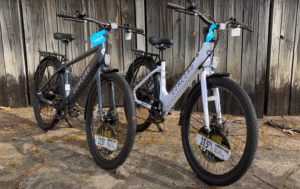
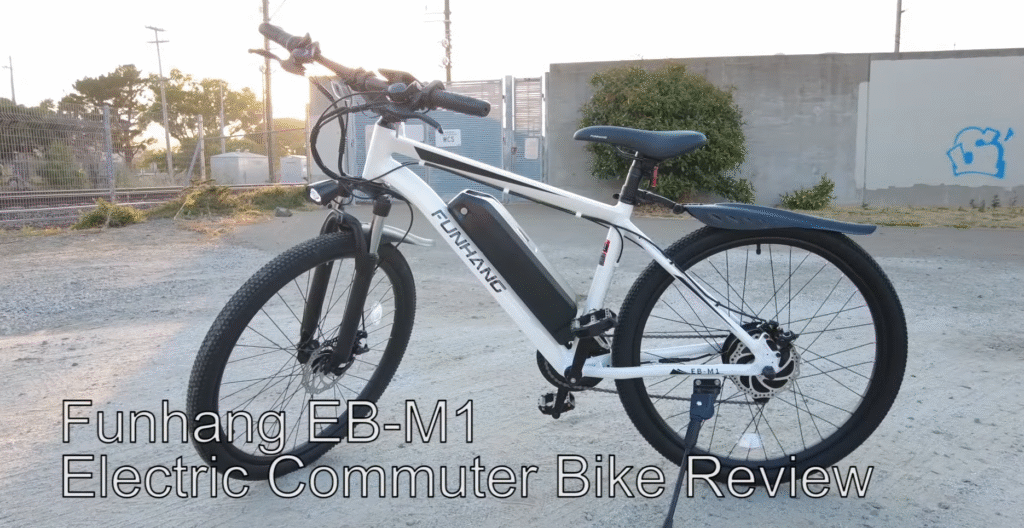
Funhang EB-M1 (26″ Mountain Bike): A hardtail mountain/commuter hybrid e-bike with an aluminum alloy frame and front suspension fork. It packs a 500W rear hub motor (1000W peak) for ~21.7 mph speeds, and a 48V 7.8Ah (374 Wh) removable battery. Expect ~25–30 miles on throttle and up to ~40–50 miles with pedal assist. The EB-M1 uses a 21-speed Shimano drivetrain and dual mechanical disc brakes. Weighing about 50 lbs, it supports riders ~5’3″–6’1″ (up to 300 lbs). Notable features include an adjustable handlebar stem, an LCD display, and included accessories (lights, horn, fenders, rear rack). This model is an all-rounder for city rides and light trail use.
Here is a video explaining the product: -
Funhang EB-C1 (26″ City Cruiser Step-Thru): A classic step-through cruiser frame for easy mounting, ideal for commuters and casual riders. It also uses the 500W (1000W peak) motor with ~21.7 mph top speed and ~55 N·m torque. The 48V 7.8Ah battery is integrated into the frame and gives ~25–30 miles (throttle) or 40–50 miles (pedal assist) range. The EB-C1 comes with a 7-speed Shimano gearing (no front derailleur) and slightly smaller disc brakes (160 mm). Despite the step-thru design, it’s robust – weighing ~55–56 lbs – and includes an upgraded adjustable handlebar stem (±30°) for comfort. Commuter-friendly features like full fenders, a strong rear cargo rack, bright LED headlight, and electronic horn are all standard. This model is tailored to urban use, park trails, and riders who value ease of use and comfort.
Here is a video explaining the product: -
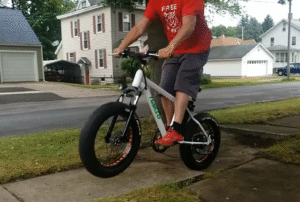
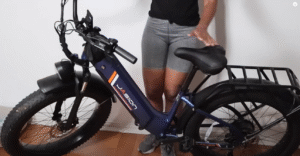
Funhang EB-S1 (26″ Fat Tire Off-Road Bike): A fat-tire electric bike built for adventure. It shares the 500W hub motor (1000W peak) but ups the battery to a 48V 13Ah pack for extended range – around 55–60 miles with pedal assist, or 28–30 miles on throttle. The EB-S1’s 26″ x 4.0″ wide tires provide excellent traction on sand, snow, or mud. Its frame is high-strength carbon steel, which pushes the weight to roughly 68 lbs, but also gives it a very solid feel for rough terrain. This model has 7-speed gearing, a lockable front suspension fork, and larger 180 mm disc brakes for better stopping power. It stands out by featuring upgraded lighting: a powerful headlight/tail-light setup and integrated turn signals to indicate turns. With a payload capacity around 330 lbs and an included rear rack, the EB-S1 is built to haul gear and handle trails or camping trips with ease.
Here is a video explaining the product:
Pricing and Availability: One of Funhang’s biggest draws is price. Depending on sales or shipping, riders have reported snagging the EB-M1 for as low as $400–$600 total. The step-thru EB-C1 typically retails around $599 (often on sale from a ~$799 MSRP), and the fat-tire EB-S1 around $699 on the Funhang website. These bikes are primarily sold online – either via Amazon or Funhang’s official web store – and they often come 85% assembled, with free shipping in some cases. Assembly generally involves attaching the front wheel, handlebars, pedals, and a few accessories, which most users find straightforward (taking about an hour with the provided tools).
Brand Support: As a newer company, Funhang doesn’t have physical service centers, but they do offer a 12-month warranty and lifetime technical support for their bikes. Notably, early customers have found the company responsive via email – for example, sending replacement parts like controllers or throttles under warranty without much hassle. However, because Funhang is a direct-to-consumer brand, traditional bike shop support might be limited (some shops are wary of servicing off-brand e-bikes). Riders may need to rely on Funhang’s support or community forums for certain repairs. On the upside, the core components (battery, motor, controller) are fairly generic, so replacements can often be found if needed. Funhang’s growing owner community – including a Facebook group for owners – also provides peer support in troubleshooting and upgrades.
Funhang vs. Other Affordable E-Bikes
How do Funhang bikes stack up against other budget e-bikes in the same class? In terms of specifications, Funhang is remarkably competitive. Many cheap e-bikes under $700 (from brands like Ancheer, Nakto, or Ecotric) come with smaller 350W motors or lower-capacity batteries, whereas Funhang gives you a true 500W motor with higher torque and a 48V system. Features like turn signals and a hydraulic-looking front fork are rare at this price point – one Funhang owner pointed out it even has “rear directionals and a very good projector headlight,” which you “cannot beat… at this price”. That said, there are trade-offs typical of this category:
-
Build & Components: Funhang uses cost-effective components (e.g. generic mechanical disc brakes, unbranded suspension). These work fine for casual riding but aren’t as refined as the parts on pricier bikes. For instance, riders note the mechanical brakes can squeal under heavy braking and may require tuning. Higher-end competitors (over $1,000) might offer hydraulic brakes or lighter aluminum frames, giving a more polished feel. Still, for the price, Funhang’s build is surprisingly robust – one YouTube reviewer (Berm Peak) tore down the bike expecting poor quality, but found it was engineered pretty decently for a “random” Amazon bike. The frame welds and overall sturdiness of Funhang bikes have impressed riders who anticipated flimsiness.
-
Performance: In real-world use, Funhang holds its own. Its ~21 mph top speed is on par with many mid-range e-bikes, and with similar 500W hub motors, it climbs hills about as well as competitors like the Aventon Pace 350 or RadMission (which cost significantly more). A Reddit review compared the Funhang EB-M1 to more established brands like Rad Power and Ancheer, and found it “surprisingly well” matched in power and ride feel for a fraction of the cost. The acceleration and torque (around 55 N·m) are enough to start from a dead stop or tackle moderate inclines without pedaling hard. Heavier riders (250–300+ lbs) report that the bike still moves along smoothly – “this thing moves with me on it!” one 275 lb rider noted, feeling it had the agility and power of bikes twice the price.
-
Battery & Range: With ~374 Wh standard battery, Funhang’s range (~30–50 miles) is actually better than some rivals, thanks to efficient electronics and the option to use pedal assist. By comparison, a similarly priced Ancheer might have a 288 Wh battery yielding only ~20–30 miles. Funhang’s fat-tire model with 13 Ah battery exceeds the range of many competitors outright. The downside is that replacement batteries (if you want a spare) aren’t as easy to source as for big brands – currently one would have to inquire through Funhang or adapt an aftermarket pack. However, Funhang’s use of a common 48V format means alternatives do exist with some tinkering.
-
Design & Features: Funhang bikes sport a fairly utilitarian design – not as sleek as more expensive models with fully integrated batteries or proprietary frames. Yet, they are very functional. Little touches like the adjustable handlebar stem (on EB-M1 and EB-C1) let riders dial in a comfortable upright posture, which some more performance-oriented bikes lack. The inclusion of a rear cargo rack and full fenders, especially on the city and fat models, saves you $100+ in accessories you’d otherwise buy separately on many competitor bikes. So while the overall fit-and-finish might be simpler, Funhang delivers a complete package ready to ride. Riders coming from other budget e-bikes have even noted that Funhang “seems more agile, and the gears smoother” compared to similar bikes (one user compared it to a Jasion/Qualis city e-bike and preferred the Funhang’s feel).
In short, Funhang e-bikes hold up strongly in the entry-level segment. They won’t outclass a $2,000 Trek or Specialized e-bike in refinement or dealer support, but against other sub-$800 options, Funhang often matches or beats the competition on power, range, and features. The main caution is the long-term support and part quality can be a bit of a mixed bag – some riders worry that if something fails after the warranty, you might be on your own. However, given the low initial cost, many are willing to take that chance, especially when early indicators show Funhang is standing behind their product with warranty assistance.
Pros and Cons of Funhang Electric Bikes
To summarize both sides of the coin, let’s break down the key advantages and disadvantages of Funhang e-bikes:
Pros:
-
Affordable Price, High Value: Funhang offers full-featured e-bikes typically for $500–$700, a price at which many competitors provide lower specs. Owners overwhelmingly praise it as “excellent value for money”. You get a powerful motor, decent battery, and accessories included – a package that could cost double from bigger brands.
-
Strong Motor & Smooth Ride: The 500W (1000W peak) hub motor provides zippy acceleration and can maintain ~20+ mph without strain. Riders find it handles hills and off-road trails “with ease,” delivering the kind of torque and speed that make rides fun. The ride quality is generally smooth, aided by the front suspension fork and fat tires (on the EB-S1) that soak up bumps.
-
Good Range for Commuting: With the standard 374 Wh battery, users report real-world ranges close to 25–30 miles on throttle and 40–50 miles with pedal assist – enough for daily commutes or long leisurely rides. The larger 13 Ah battery option pushes this even further (50+ miles). Removable batteries allow charging off the bike and swapping in a spare for extended trips.
-
Feature-Rich (Lights, Signals, Rack, etc.): Unlike many entry e-bikes, Funhang includes practically all necessary accessories. Bright LED headlight and taillight for night riding, a loud electronic horn, and even turn signal indicators on some models improve safety. Full fenders and a rear cargo rack come standard, saving additional costs for commuters. The LCD display is easy to read and shows speed, battery, assist level, and more.
-
Sturdy and High Weight Capacity: These bikes are built tough – the frames are durable (aluminum or steel) and can support riders up to 300–330 lbs. Tall and heavy riders have successfully used Funhang bikes without issues, noting that the bikes “move” well even under a 275+ lb load. This makes Funhang a viable option for a wide range of body types, including those who find other budget bikes too flimsy.
-
Beginner-Friendly & Easy to Assemble: Funhang targets entry-level riders, and it shows. The bikes arrive mostly assembled (just attach a few parts) and include all needed tools. Many buyers – even those new to cycling – found assembly straightforward, often completing it in ~1 hour. Operating the bike is intuitive: there are 5 pedal-assist levels, plus a thumb throttle if you don’t want to pedal at all, so anyone can hop on and start riding with confidence.
Cons:
-
Heavier than Average: At ~50–60+ pounds, Funhang e-bikes are on the heavier side. The fat-tire EB-S1 weighs ~68 lbs with its steel frame. This weight can make the bike difficult to carry up stairs or load into a car. It also means if your battery dies, you’ll be pedaling a hefty bike home. The weight does add stability, but those seeking a lightweight e-bike might find Funhang cumbersome.
-
Basic Components (Entry-Level Parts): To keep costs low, Funhang uses generic components where possible. The mechanical disc brakes (160–180 mm rotors) provide adequate stopping power, but they lack the precision and quietness of hydraulic brakes – some riders report squeaking and need for occasional adjustment. The Shimano gears (7-speed or 21-speed) are reliable but very standard – the bike isn’t as refined in shifting as more expensive models. Don’t expect name-brand shocks or drivetrain parts; everything is functional but no-frills.
-
Limited Brand Presence & Support: Since Funhang is a newer, direct-sale brand, there’s no nationwide dealer network or established service centers. While the company does honor its 1-year warranty (and has been quick to send replacement parts in some cases), fixing issues beyond basic repairs might be a DIY affair. User manuals and documentation are sparse – one owner noted the lack of a detailed service manual, which made a simple repair (reinstalling a rear wheel after a flat) more challenging. In short, you won’t get the hand-holding or polished customer service that big brands provide.
-
Battery Capacity on Base Models: The standard 48V 7.8Ah (374 Wh) battery, while decent, is on the smaller side by today’s standards. Under heavy use (e.g. high speed or a heavy rider using throttle continuously), the effective range can drop. Riders who frequently rely on max power or tackle long hills might find the range less than the advertised 40–50 miles. The battery is also an in-house unit; getting a spare or replacement may require going through Funhang (or custom adapting another battery) since it’s not a widely standardized pack.
-
Fit and Finish: This is a minor gripe at the price point, but worth noting. The overall finish (weld quality, paint, cable management) is satisfactory but not as polished as premium e-bikes. For example, the Funhang logo is painted in big letters on the frame – some riders wished for a subtler or more stylish branding. There may be occasional quirks, like slightly generic instructions or needing to double-check bolt tightness after initial rides. These bikes might rattle a bit on bumps until you fine-tune everything. It’s all part of the budget e-bike experience, but new owners should be prepared to do a little tinkering for the best results.
Despite the cons, it’s clear that Funhang’s advantages often outweigh the drawbacks for budget-conscious riders. As one rider succinctly put it after putting 100+ miles on the bike: “I just got my bike today and it’s amazing! Definitely a great deal!”. Still, going in with realistic expectations is key – Funhang delivers a lot for what you pay, but it’s not a high-end machine.
Are Funhang E-Bikes Good for Beginners?
If you’re new to electric biking, Funhang can be an excellent starting point. Here’s why:
Easy Setup & Learning Curve: Beginners won’t be overwhelmed with a Funhang. The bike comes mostly assembled and includes step-by-step instructions (plus an online video) to finish the setup. Many first-time e-bike owners report assembling their Funhang in about an hour with no prior experience. Once built, operation is straightforward – just charge the battery, power on the display, and either pedal with assistance or use the throttle. The controls (assist up/down buttons, throttle, brakes) are simple to grasp even if you’ve never ridden an e-bike before. One parent who bought a Funhang for their teenager noted it was “easy to operate… definitely would choose this one again” for a novice rider.
Confidence-Inspiring Ride: Beginners often worry about handling and safety. Funhang bikes, being weighty and equipped with wide tires, feel very planted on the road. The combination of front suspension and fat tires (on certain models) gives a smooth, stable ride that boosts confidence, even on uneven pavement or light trails. The motor’s power is there when you need it, but it’s delivered in a controlled way – you can select lower assist levels to start out gentle, then increase as you get comfortable. The top speed is capped around 20 mph out of the box, which is fast enough to be fun but not so extreme as to intimidate a new rider. Plus, having features like bright lights, reflectors, and a horn means a beginner can focus on riding without worrying about adding all that safety gear separately. Visibility and safety are pretty good right from the start.
Low Entry Cost & Low Risk: For someone unsure about committing to an e-bike hobby, Funhang’s affordability is a huge plus. Spending $500–$600 for a full-featured electric bike is a relatively low barrier to entry (compared to $1,500+ for mainstream brands). This makes it easier for beginners to give e-biking a try. If it turns out e-bikes aren’t your thing, you haven’t sunk a fortune. On the other hand, if you love it, you’ve gotten a great deal. The strong resale demand for affordable e-bikes means you could likely recoup much of the cost if you decided to sell the Funhang later on. There’s also peace of mind in knowing the bike is UL certified for safety (battery and electronics are UL 2271/2849 certified), so beginners don’t have to worry about basic electrical safety or battery fires – an important consideration for first-timers.
Learning Maintenance and Upgrades: Owning a Funhang can be a gentle introduction to e-bike maintenance. Because it’s a simpler bike, beginners can learn to do basic tune-ups (like adjusting brakes or lubing the chain) without complex proprietary parts. Many Funhang owners share tips online for common tweaks – for instance, some recommend swapping the stock saddle for a softer, more padded seat if you find it too firm (a $30 upgrade that can greatly improve comfort). The mechanical brakes can also serve as a good learning platform; you can practice adjusting them or even upgrade to aftermarket brake pads for better performance. In essence, a Funhang invites tinkering, which can be fun and educational for those new to bike mechanics. And if you run into issues, there’s a growing community of Funhang riders (forums, Reddit, Facebook groups) where beginners can ask questions and get help, which makes the journey less daunting.
Who Should Consider Funhang? If you are a beginner or casual rider who wants an e-bike for errands, short commutes, campus, or weekend fun – and you don’t want to spend a lot – Funhang is squarely aimed at you. It’s also a good choice for riders who value features and utility: for example, older riders or students who need a reliable bike with a rack (for groceries or a backpack) and easy on/off step-through frame (in the case of the cruiser model) will appreciate what Funhang offers. Riders over 50 in particular have found Funhang e-bikes to be accessible and enjoyable; the brand’s owner group even has many senior members sharing their experiences, highlighting that these bikes can get folks of all ages out and about.
That said, if you’re a performance enthusiast or you demand top-tier components and super lightweight design, you may outgrow a Funhang quickly. It’s not going to rival premium e-MTBs on hardcore trails or high-end commuters in sleekness. But as a learning bike or everyday cruiser, Funhang hits a sweet spot. The smile on a new rider’s face when the throttle kicks in or when they conquer a hill with ease is real – and Funhang delivers those moments without emptying your wallet.
Conclusion
Funhang electric bikes have proven that you can get a capable, feature-packed e-bike on a tight budget. This brand has essentially lowered the cost of entry to e-biking without delivering a dud, and that’s no small feat. Riders and reviewers alike have been pleasantly surprised that a $600 Amazon bike can be “powerful and comfortable” and even include perks like turn signals. Of course, compromises exist – mainly in weight and component refinement – but Funhang wisely focused on the areas that matter most for enjoyable riding: a strong motor, decent battery range, and a solid frame.
From our deep dive, it’s clear Funhang offers great value for beginners, students, or anyone who wants an affordable electric bike for commuting or recreational use. The brand has built trust through a growing track record of happy customers, and it brings experience and practicality in a segment often plagued by sketchy no-name products. With Funhang, you’re not getting a no-frills barebones bike; you’re getting an almost turnkey e-bike experience (assemble, charge, and go) with plenty of bells and whistles included.
In summary, Funhang e-bikes are an attractive option if you understand their intent: they’re not ultra-refined machines, but rather everyday e-bikes that “punch above their price,” delivering a fun and reliable ride for a fraction of what you’d normally expect to pay. If your cycling needs match what Funhang provides – moderate speeds, moderate distances, and lots of fun on a budget – then a Funhang bike could be a fantastic choice to get you rolling into the world of e-biking.