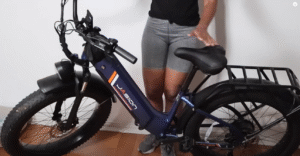
Electric bikes are surging in popularity. They combine traditional pedaling with a battery-powered motor to let riders travel farther and faster with less effort. Today’s electric bicycles appeal to commuters, adventurers, and fitness enthusiasts alike. They can turn a tough hill into a gentle climb and extend your range, while still providing low-impact exercise and cutting your carbon footprint. This guide explains how e-bikes work, their main types and components, and why they matter – from health and environmental benefits to costs, safety and buying tips.
Key Points About Electric Bikes
- Definition & Popularity: An e-bike is a bicycle fitted with an electric motor and battery to assist pedaling. They’ve seen rapid growth – over 880,000 e-bikes were sold in 2021, and sales are projected to keep rising. Riders use e-bikes for commuting, recreation, errands, and fitness.
- Classes & Types: E-bikes are classified by how they assist: Class 1 (pedal-assist only, up to 20 mph), Class 2 (throttle and pedal assist, up to 20 mph), and Class 3 (pedal-assist up to 28 mph). Each class has rules about where it can be ridden and what speed it can reach. (See the table below for details.)
- Key Components: The core parts are the motor, battery, frame, and controls. Most frames use lightweight aluminum or carbon fiber for strength. Motors can be hub-mounted or mid-drive, providing different ride feels. Battery capacity (250-650 Wh or more) determines range: higher watt-hours mean longer rides per charge.
- Benefits: E-bikes offer health and environmental perks. Studies show riders still get a moderate workout: one found e-bike users improved reaction times and cognitive function after regular riding. They also boost mood and confidence, even for people with health challenges like stroke. Environmentally, e-bikes emit far less CO₂ than cars: manufacturing one produces roughly 423-678 lbs of CO₂ versus 5.6 tons for a typical car. Recharging an e-bike (600 Wh battery) adds only ~0.5 lbs of CO₂ for about 40 miles of use, whereas a gas car emits ~0.8 lbs per mile.
- Costs: A good-quality e-bike starts around $1,500-$2,500, with the average near $2,000. High-end models can exceed $6,000. Cheaper e-bikes (<$500) often cut corners and aren’t recommended. However, operating costs are extremely low: electricity costs about $0.22 per 100 miles, which is up to 68 times cheaper than fueling a gasoline car. Lower maintenance and no parking fees add to the savings.
- Safety & Laws: E-bikes can reach high speeds (Class 3 up to 28 mph), so safety gear is vital. Head injuries have spiked with e-bike use: one study reported a 49-fold increase over five years, partly due to lax helmet laws. In California, anyone under 17 and all Class 3 riders must wear a helmet. Riders should obey local e-bike regulations (speed limits, age restrictions) and remember that most Class 1-3 e-bikes legally count as bicycles (no license or registration needed).
Recommended: Best Recommended Durable Hydraulic Brake Conversion Kits for Electric Bikes
What Are Electric Bikes?
An electric bike is essentially a bicycle equipped with an electric motor and battery to assist your pedaling. When you pedal (or use a throttle on some models), the motor kicks in to reduce effort, especially helpful on hills or long rides. Most e-bikes let you choose levels of assistance via a control panel or throttle. The rider still pedals, making it a healthy, active form of transport.
E-bikes come in various styles, from city commuters to mountain bikes and cargo bikes. They look like regular bikes but include extra components (see next section). Generally, an e-bike’s electric assist stops at a certain top speed for safety and legal reasons (e.g., 20 or 28 mph depending on class).
E-bike Classes (Class 1, 2, 3)
E-bikes are grouped into three classes based on how they deliver power and their top speed:
| Class | Max Speed | Throttle | Pedal Assist | Where Allowed |
|---|---|---|---|---|
| Class 1 | 20 mph | No | Yes | Bike lanes, shared paths, some trails (pedal-assist only) |
| Class 2 | 20 mph | Yes | Yes | Roadways and bike paths (throttle and pedal-assist) |
| Class 3 | 28 mph | Sometimes* | Yes | Roads and bike lanes (fastest class; no throttle on some models) |
*Note: Some Class 3 models have a throttle but it is capped at 20 mph, and certain states (e.g. California) do not allow Class 3 throttles at all.
The right class depends on your use. Class 1 & 2 bikes are common and often allowed on more paths, while Class 3 bikes are for faster on-road commuting (helmets required).
Key Components of Electric Bikes
Every electric bike includes the usual bicycle parts plus a motor, battery, and controls. Understanding these helps you compare models.
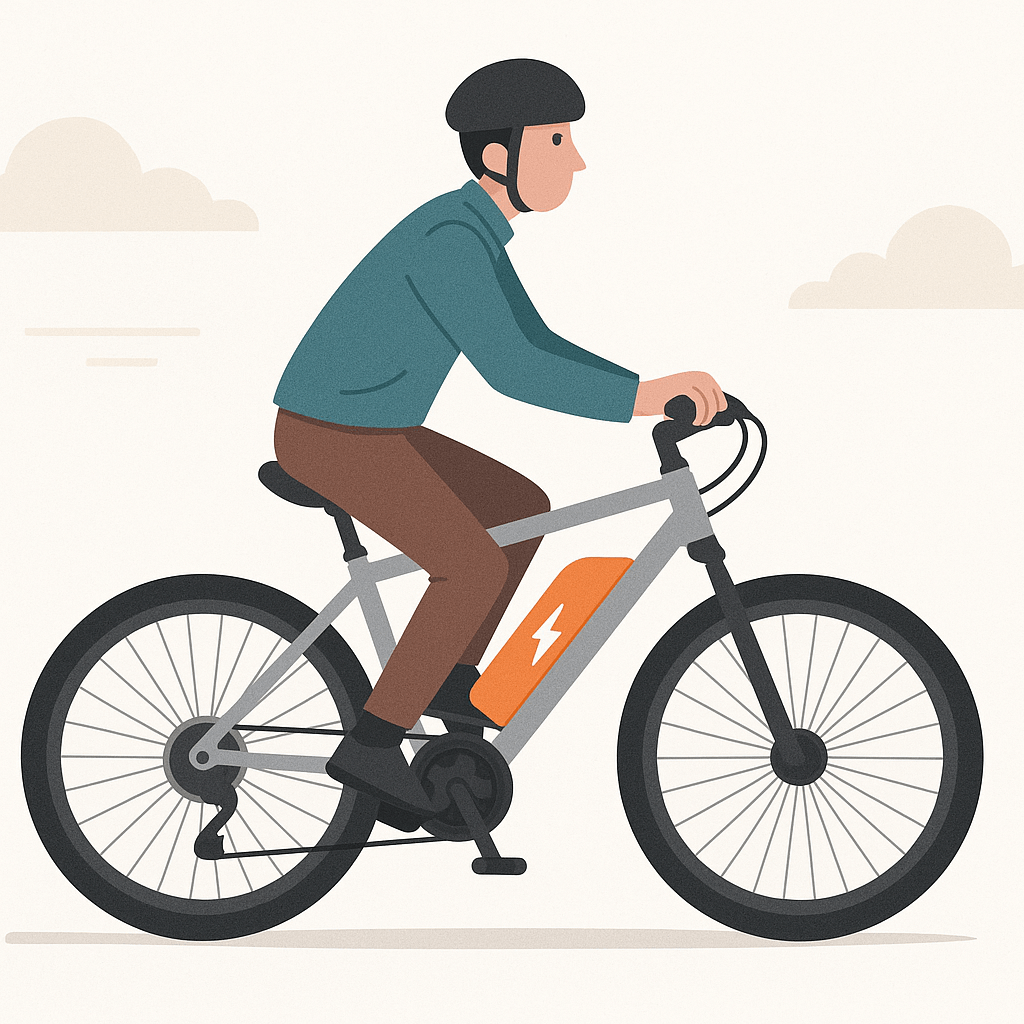
- Frame & Design: The frame is the backbone that supports everything. Common materials are aluminum, carbon fiber, or steel, which affect weight and strength. A lighter frame makes the bike more nimble, while sturdy steel can carry heavier loads. Frames also vary in geometry: city/commuter e-bikes often have an upright design for comfort, while mountain-style e-bikes have suspension and rugged builds for off-road use. Image: Diagram showing an electric bike’s frame and structure (battery pack integrated into frame).
- Motor: The motor is the “heart” of the e-bike, providing electric power to assist your pedaling. Two common types are hub motors (built into the wheel hub) and mid-drive motors (mounted near the pedals). Hub motors are simpler and quieter, while mid-drives use the bike’s gears for more efficient power transfer. In either case, when you start pedaling, a sensor tells the motor to engage. More powerful motors (measured in watts) give stronger assist – for example, a 250W motor is standard in Europe, while U.S. Class 3 bikes might use up to 750W. The motor’s job is essentially to give you a boost, making hills feel easier and increasing your top speed.
- Battery: An e-bike’s battery stores the energy to run the motor. Most modern e-bikes use lithium-ion batteries mounted on or inside the frame. Key specs include capacity (in watt-hours, Wh) and voltage. Higher capacity means longer range. For example, common batteries are 250-650 Wh; a 500 Wh battery can often power a ride of 20-50 miles depending on terrain and assist level. Charging time varies by model. Battery placement affects design: some bikes have a removable battery on the downtube, while others conceal it inside the frame. Battery care (keeping it charged and storing in moderate temperatures) is important for longevity.
- Controls: A handlebar-mounted display or control unit lets you switch assist levels, monitor battery life, and sometimes use a throttle. Most systems let you choose a “pedal assist” level from eco (light assist) up to turbo (strong assist). A key component, the controller, acts as the brain, regulating power from battery to motor for a smooth ride. Quality controllers and wiring (often all from the same brand, like Bosch or Shimano) can improve reliability.
Recommended: Best Electric Bikes with Pedal Assist: A Comprehensive Guide
Benefits of Electric Bikes
Electric bikes offer a blend of advantages that make them appealing. Here are some key benefits:
- Health & Fitness: Riding an e-bike still gives you exercise. Research shows e-bikers often get equal or even more activity than on regular bikes, because they ride longer or more frequently. For example, one study found riders who pedaled an e-bike (with assist) for 30 minutes three times a week improved their reaction times, focus, and self-reported mental health. Riders enjoy the fun of cycling with less strain, which can boost mood and confidence. Even older adults and those recovering from injuries find e-bikes helpful – stroke survivors in one trial said pedal assist let them ride safely and increase activity. In short, e-bikes make fitness more accessible by giving people a gentle boost when they need it.
- Environmental Impact: E-bikes are eco-friendly. They run on electricity (often recharged from clean grids or solar) and produce no tailpipe emissions. Compared to cars, the carbon footprint is tiny. Manufacturing an e-bike (including its battery) emits roughly 423-678 lbs of CO₂, whereas building a typical car emits around 5.6 tons. When riding, charging the e-bike for a long trip (say 40 miles) produces only about half a pound of CO₂. By contrast, a gasoline car emits about 0.8 lbs per mile. So replacing short car trips with an e-bike drastically cuts your carbon emissions. Every e-bike trip helps ease traffic and reduce pollution.
- Cost Savings: Although initial price is higher than a regular bike, e-bikes save money over time. Electricity is very cheap: charging an e-bike costs about $0.22 per 100 miles, which is roughly 20 cents for a long week of commuting. Fueling a gas car costs about $14.69 per 100 miles, nearly 68 times more. You also save on parking fees, tolls, and gym memberships (since you’re exercising). Upway estimates that replacing routine car trips with an e-bike could save hundreds or even thousands of dollars annually once you factor fuel, maintenance, insurance, etc..
- Convenience: E-bikes make many tasks easier. They let you carry heavier loads (think grocery bags or gear) on your bike without as much effort. Some cargo e-bikes are designed specifically for hauling kids or goods. Commuting by e-bike can be faster than driving in congested areas, and you can often ride bike lanes or paths cars can’t use. You arrive less sweaty than on a regular bike, which is a big draw for errands and work commutes. Urban cyclists value e-bikes for turning long or hilly routes into casual rides.
Costs and Maintenance
Owning an e-bike involves some upfront and ongoing costs, but these are reasonable compared to cars.
- Price Range: You can find basic e-bikes around $1,000, but a reliable, well-made e-bike usually costs $1,500-$2,500. These mid-range models have quality frames, motors, and batteries. Premium e-bikes with advanced tech (like full suspension mountain e-bikes or fast Class 3 models) can go to $6,000 or more. Very cheap e-bikes (<$500) often use low-quality parts and are not recommended. When budgeting, consider what you need: more range and power cost more. Replacement batteries (after a few years) can be $300-$800 depending on capacity.
- Running Costs: Electricity to charge the battery is minimal. As noted, it’s on the order of cents per charge for weekly commutes. Maintenance resembles a regular bicycle: keep chains lubricated, tires inflated, and brakes adjusted. Unlike cars, e-bikes have almost no fluids or complex engines, so there’s no oil changes. Major wear parts like brake pads, tires, and chains will need occasional replacement. The biggest maintenance cost may be a new battery after ~3-5 years, which is still cheaper than major car repairs. Overall, e-bike upkeep is much cheaper than a car’s – and as Upway notes, if you ride your e-bike more, you can extend the life of your car (saving even more).
Recommended: 5 Fixes When Your E-Bike Battery Won’t Charge
Safety and Regulations
Because e-bikes are faster and heavier than traditional bicycles, safety is crucial. Keep these points in mind:
- Wear a Helmet: This cannot be stressed enough. Research indicates helmet laws significantly reduce head injuries. In California, anyone under 17 and all riders on Class 3 e-bikes must wear a helmet. Even if not legally required where you ride, wearing a helmet is strongly advised.
- Observe Speed Limits: Class 3 e-bikes can reach 28 mph, which is much faster than normal bikes. Ride at speeds suited to traffic and road conditions, and follow posted e-bike speed limits. Exceeding the built-in limit (via tuning or removing speed regulators) is illegal and dangerous.
- Know Your Local Laws: E-bike laws vary by state and country. In most U.S. states, Class 1-3 e-bikes are treated like regular bicycles – no license, registration, or license plate needed. Some areas restrict e-bikes on certain trails or paths. For example, certain trails might allow only Class 1 and 2 (up to 20 mph). Check your local regulations about where e-bikes can go. Also note age limits: many places allow e-bikes only for riders 16 or older.
- Stay Visible and Vigilant: Because e-bikes are faster, it’s easier to surprise pedestrians or other cyclists. Use lights and reflectors at night, signal turns, and be aware of traffic. Always engage the brakes gently until you get used to an e-bike’s weight and power – electric motors can accelerate you more quickly than a normal bike pedal.
Choosing the Right Electric Bike
With many models on the market, how do you pick? Consider your intended use first:
- Commute vs Off-road: For city riding or errands, a step-thru city/commuter e-bike with fenders, lights, and racks is convenient. It usually has a mid-range battery (30-50 mile range) and comfortable upright position. If you want to hit trails or tough hills, a mountain e-bike with suspension and fat tires is better.
- Range and Battery: Estimate your typical trip length and add a buffer. For example, if your commute is 20 miles round-trip, look for at least a 40-mile range battery. Some bikes allow adding a second battery for extra range. Remember that heavier loads and hilly terrain cut range.
- Load Capacity: If you plan to carry groceries, kids, or equipment, consider a cargo e-bike or one with racks and panniers. Some e-bikes can support 300+ lbs. Ensure the motor power is strong enough to handle the weight.
- Quality and Safety: Look for reputable brands and models. Check that the battery and motor are UL-certified (safety standards) and that the manufacturer has good reviews. Avoid unknown brands with unclear specs. A one-year warranty and a local shop for service are big pluses.
- Test Ride: Always test-ride a few bikes. Pay attention to comfort, throttle/pedal feel, and ease of controls. A forum-savvy tip: inquire about durability (have others had issues?) and availability of replacement parts.
- Budget: Decide how much you can spend. A mid-range e-bike (under $3,000) will usually meet most needs well. Factor in accessories like a quality lock, helmet, and lights.
By matching the bike to your lifestyle, you’ll get the most benefit from your e-bike.
In summary, electric bikes open up many new ways to ride. They make cycling more accessible and practical while still promoting fitness and reducing environmental impact. Whether you’re a daily commuter or a recreational rider, understanding e-bike classes, components, costs, and laws will help you choose the right bike and ride safely. Stay informed, wear your helmet, and enjoy the ride!